
What Happens If a Cheque Bounces? A Complete Legal Guide for 2026
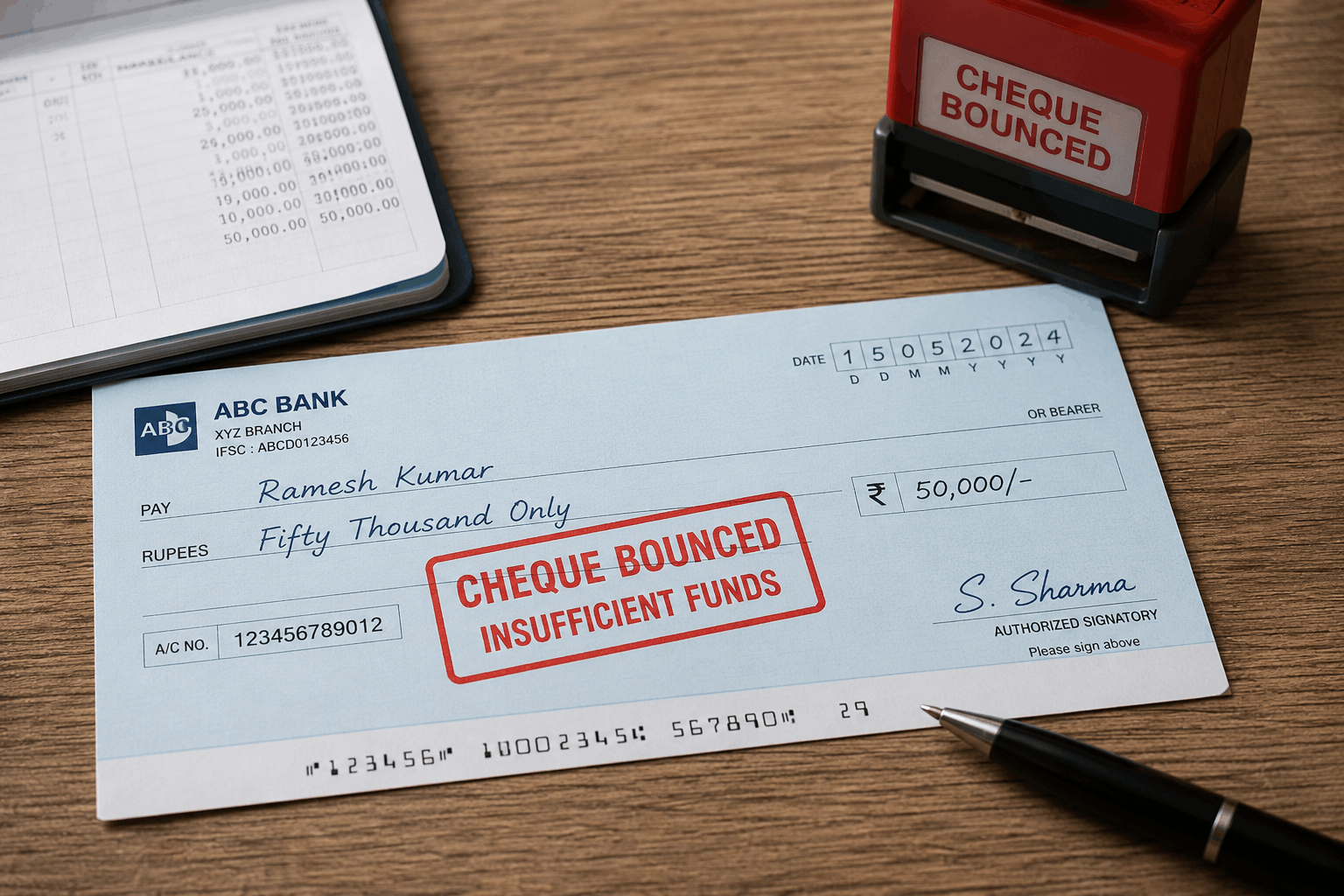
A cheque bounce can create serious financial and legal complications for both the issuer and the recipient. In India, cheque dishonour is governed primarily by Section 138 of the Negotiable Instruments Act, 1881, which provides legal remedies to the aggrieved party when a cheque issued towards a legally enforceable debt or liability is returned unpaid by the bank. As we move into 2026, understanding the legal consequences, procedures, and rights associated with cheque bounce cases has become increasingly important for individuals, businesses, and professionals.
What Is a Cheque Bounce?
A cheque is considered “bounced” or dishonoured when the bank refuses to honour it and returns it unpaid. This can happen for several reasons, including insufficient funds, signature mismatch, overwriting, account closure, stale cheque, or payment being stopped by the drawer. Among these reasons, insufficient funds is the most common ground that attracts legal action under Section 138 of the Negotiable Instruments Act.
A bounced cheque can damage business relationships, delay financial transactions, and lead to criminal proceedings if the legal requirements are fulfilled.
Common Reasons for Cheque Dishonour
Banks may return a cheque unpaid for various reasons, such as:
- Insufficient balance in the account.
- Signature mismatch.
- Overwriting or alteration without authentication.
- The cheque being stale or outdated.
- Closure of the bank account.
- Stop payment instructions issued by the account holder.
- Incorrect date or incomplete information.
- Difference between the amount in words and figures.
Understanding the reason mentioned in the bank’s cheque return memo is crucial because it determines the legal course of action available.
Legal Provisions Governing Cheque Bounce Cases
Section 138 of the Negotiable Instruments Act, 1881, criminalizes cheque dishonour arising from insufficient funds or when the amount exceeds the arrangement made with the bank. However, certain conditions must be fulfilled before initiating legal proceedings.
The cheque must have been issued towards the discharge of a legally enforceable debt or liability. It should be presented to the bank within its validity period, and the payee must issue a legal demand notice after receiving information regarding the dishonour.
Failure to comply with these statutory requirements can weaken or invalidate the complaint.
Procedure to File a Cheque Bounce Case
1. Presentation of the Cheque
The payee must deposit the cheque within its validity period, which is generally three months from the date mentioned on the cheque.
2. Receipt of Bank Return Memo
If the cheque is dishonoured, the bank issues a cheque return memo specifying the reason for dishonour.
3. Sending a Legal Notice
The payee must send a legal demand notice to the drawer within thirty days from the date of receiving the return memo. The notice should demand payment of the cheque amount.
4. Waiting Period
The drawer is granted fifteen days from the date of receipt of the legal notice to make the payment.
5. Filing the Complaint
If the payment is not made within the prescribed period, the complainant can file a cheque bounce complaint before the competent Magistrate Court within thirty days after the expiry of the notice period.
Timely action is essential because missing statutory deadlines can adversely affect the case.
Punishment for Cheque Bounce in India
If the court finds the accused guilty under Section 138, the following penalties may be imposed:
- Imprisonment for a term that may extend up to two years.
- Fine that may extend to twice the amount of the cheque.
- Both imprisonment and fine, depending on the facts and circumstances of the case.
Courts may also encourage settlement between the parties to ensure speedy resolution and recovery of the amount involved.
Documents Required for Filing a Cheque Bounce Complaint
Proper documentation plays a significant role in establishing the claim. The complainant should generally possess:
- Original cheque.
- Bank cheque return memo.
- Copy of the legal demand notice.
- Proof of dispatch and delivery of the notice.
- Any agreement, invoice, receipt, or supporting evidence proving the debt or liability.
- Identity and address proof.
Maintaining organized records strengthens the credibility of the complaint.
Defences Available to the Drawer
A person accused in a cheque bounce case may raise several legal defences, including:
- The cheque was not issued for a legally enforceable debt.
- The cheque was lost or stolen.
- The amount had already been paid.
- The complainant misused a security cheque.
- The cheque was obtained through coercion or fraud.
- Mandatory legal procedures and timelines were not followed.
Every defence depends on the facts of the case and supporting evidence produced before the court.
Can a Cheque Bounce Case Be Settled?
Yes. Cheque bounce matters are compoundable offences, meaning the parties can mutually settle the dispute at any stage of the proceedings. Settlement helps avoid prolonged litigation and allows both parties to resolve the matter amicably.
Courts often encourage mediation and negotiated settlements, particularly in commercial disputes where preserving business relationships is beneficial.
Tips to Avoid Cheque Bounce Issues
Individuals and businesses can minimize the risk of cheque dishonour by adopting preventive measures such as:
- Maintaining sufficient balance before issuing cheques.
- Verifying cheque details carefully.
- Avoiding overwriting and corrections.
- Keeping track of issued cheques.
- Issuing cheques only against genuine obligations.
- Responding promptly to legal notices.
- Maintaining proper financial records and documentation.
Preventive compliance can save time, money, and reputational damage.
Why Legal Assistance Matters
Cheque bounce cases involve strict statutory timelines and procedural requirements. A minor mistake in issuing notices, filing complaints, or preserving evidence can impact the outcome of the matter. Seeking guidance from an experienced legal professional ensures that your rights are protected and that the appropriate legal strategy is adopted.
Whether you are a complainant seeking recovery of your dues or a person defending allegations of cheque dishonour, professional legal advice can help you navigate the complexities of the legal process effectively.
Conclusion
Cheque bounce cases continue to be one of the most commonly litigated financial disputes in India. Understanding the legal framework under Section 138 of the Negotiable Instruments Act, the applicable timelines, and the remedies available can help individuals and businesses make informed decisions. Prompt action, proper documentation, and professional legal guidance significantly improve the chances of achieving a fair and effective resolution.
If you have received a bounced cheque or have been accused in a cheque dishonour case, acting without delay is crucial. Knowing your rights and obligations under the law is the first step toward protecting your financial interests and ensuring justice through the legal system.